Showing posts with label easy. Show all posts

Saturday, September 4, 2010

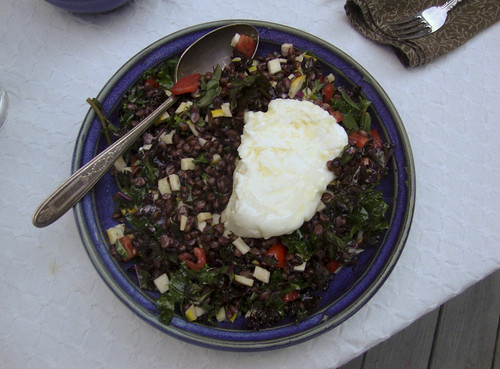
Use Your Booty: Barley Salad with Burrata

Black Barley Salad

I meant to to get this post up before this holiday weekend started. This salad is a great healthy, vegetarian, colorful side dish that goes well alongside grilled meat. It also improves with age - so you can make it a day or two ahead. I fancied it up with a large chunk of burrata cheese - feel free to omit it if you prefer.

Black Barley Salad with Burrata
Serves about 8-10 as a side dish, makes a generous 4-6 main course servings.
I liked the richness added by the burrata - if you don't have any at hand, fresh mozzarella, goat cheese or ricotta salata would be great. Or go dairy-free and toss on slices of hard-boiled egg.
  • 1 cup uncooked black barley or 4 cups cooked barley (or pearl barley or "regular" barley - this salad would also work with farro or wheatberries)
  • 2-3 small zucchini, diced
  • 2 large tomatoes, diced
  • 2 handfuls purslane leaves
  • 1 small onion, sliced into thin rounds
  • red wine vinegar
  • olive oil
  • salt and pepper
  • 8 ounces burrata, left whole (preferred) or torn into shreds
Cook the barley, if needed: pick through the uncooked grains to remove any stones or bits of twig or chaff. Place in saucepan and cover with water by two inches and bring to boil. Reduce heat to a simmer, add a healthy pinch of salt and cook until the grains are tender. This will take from 45 minutes to 2 hours, depending on the grain you're cooking and how old it is. Add more water as needed to keep the barley covered.

When the barley is cooked, drain it in a colander and set aside to cool.

Toss half of the cooked barley with the vegetables. Add more barley until you have the vegetable/grain ratio you like. (You may not use all of the barley. Any leftovers can be frozen for future use.)

Sprinkle the salad with red wine vinegar and a healthy glug or two of olive oil. Season to taste with more vinegar and oil and salt and pepper. Top the salad with burrata and serve.

This Summer, I am chronicling my first CSA (Community Supported Agriculture) experience. My CSA share is from Arrowhead Farm, a farm based in Newburyport, MA. Each week, I am posting about what was in my share and what I'm doing with it. By way of full disclosure, I won my share through a raffle and am not paying for it. However, Arrowhead did not know I was entered in the raffle, and I received no special consideration because of this blog. I paid for my livestock share. A full set of all the photos I've taken of this share is here.

Monday, August 16, 2010

Use Your Booty: Quick Pasta Dinner

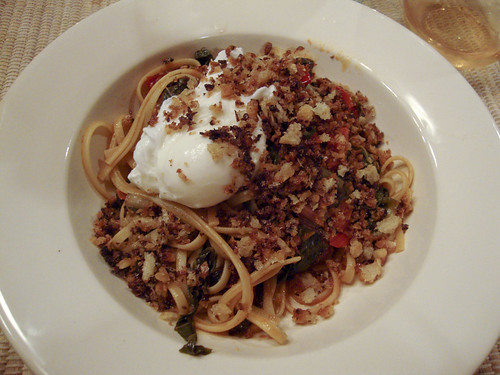
Linguine with Tomato, Chard and Crispy Crumbs

What can I say? I'm a sucker for an egg and some crispy crumbs. If you've been reading this summer's posts, this dish may look a little familiar, but it's a nice go-to for when you don't know what's going on the dinner table. I boil some pasta, make a quick sauce of sautéed vegetables and top the plate with a poached or fried egg and some crispy bits. The crispy crumbs add a nice textural contrast to the plate.

This plate was: linguine and a sauce of bacon, chunks of plum tomato, and shreds of Swiss chard and onion. I drained the pasta (I lifted it out of the pot with tongs), and added it right to the skillet containing the sauce. Then I poached the eggs right in the pasta pot. In the meantime, the crumbs were toasting in the toaster oven with a little olive oil.

Dinner in about 15 minutes!


This Summer, I am chronicling my first CSA (Community Supported Agriculture) experience. My CSA share is from Arrowhead Farm, a farm based in Newburyport, MA. Each week, I am posting about what was in my share and what I'm doing with it. By way of full disclosure, I won my share through a raffle and am not paying for it. However, Arrowhead did not know I was entered in the raffle, and I received no special consideration because of this blog. I paid for my livestock share. A full set of all the photos I've taken of this share is here.
Tuesday, July 20, 2010

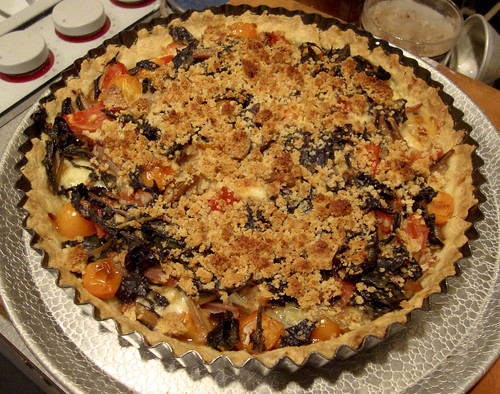
Use Your Booty: Easy Vegetable Tart


So here's a savory tart made with the tart dough recipe that I used to make the fruit tart.

I pulled the filling together while Dave made the crust. He's never made any kind of pastry before, and he put the dough together quickly and pressed it into the tart shell.

I tossed together some CSA tomatoes, cooked Swiss chard and cubed goat cheese (Middletown Tomme) from West River Creamery. I crumbled a leftover savory shortbread over the top of the tart - next time I think I'll use chopped nuts or shredded parmesan over the top.

So nice to have another quick weeknight recipe on hand. In the time it took to preheat the oven, we made the tart crust and put together the filling. The tart takes about 35-40 minutes to bake, so a really delicious, elegant dinner is on the table in about an hour.

This Summer, I am chronicling my first CSA (Community Supported Agriculture) experience. My CSA share is from Arrowhead Farm, a farm based in Newburyport, MA. Each week, I am posting about what was in my share and what I'm doing with it. By way of full disclosure, I won my share through a raffle and am not paying for it. However, Arrowhead did not know I was entered in the raffle, and I received no special consideration because of this blog. I paid for my livestock share. A full set of all the photos I've taken of this share is here.
Monday, July 19, 2010

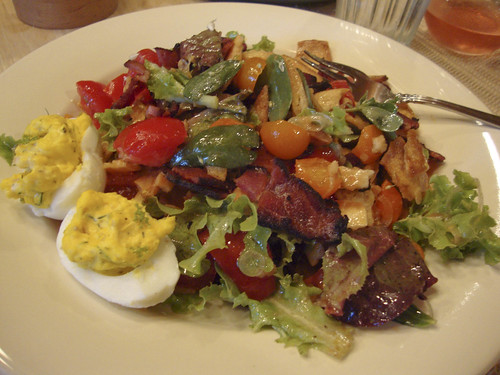
Use Your Booty: BLT Fattoush

I really like bread salads. They're a great way to showcase fresh vegetables. Panzanella is the bread salad that I make most often; it requires a hearty, rustic loaf, which I don't always have on hand. Fattoush is a bread salad made with fried or toasted pita bread. Traditionally fattoush is pita with parsley, tomato, onion and herbs.

I actually wanted to make BLT sandwiches for dinner, but had so sandwich-suitable bread in the kitchen. I did have a bag of pita chips left over from an event earlier in the week, so I decided to use them as the base for a fattoush salad. The devilled eggs are definitely a non-traditional garnish as is the addition of bacon.

The fattoush formula is very adaptable to whatever's in the pantry. It's a great "sponge" for bits of leftover cooked and raw vegetables. I like the pita to be about 1/3 of the total salad, but you should feel free to find your own perfect ratio of pita to vegetables.

No recipe today, just a guide:

BLT Fattoush
For each person you're serving, combine in a large bowl:
  • 2 handfuls of torn lettuce leaves
  • 1/2 cup of coarsely chopped tomato
  • 1-2 slices of cooked bacon
  • a few slices of very thinly sliced onion
  • 1-2 handfuls pita chips, crushed lightly
Dress generously (the chips will soak up a lot of dressing) with a lemon or red wine vinegar-based vinaigrette. Season with salt and pepper.

This Summer, I am chronicling my first CSA (Community Supported Agriculture) experience. My CSA share is from Arrowhead Farm, a farm based in Newburyport, MA. Each week, I am posting about what was in my share and what I'm doing with it. By way of full disclosure, I won my share through a raffle and am not paying for it. However, Arrowhead did not know I was entered in the raffle, and I received no special consideration because of this blog. I paid for my livestock share. A full set of all the photos I've taken of this share is here.
Sunday, July 18, 2010

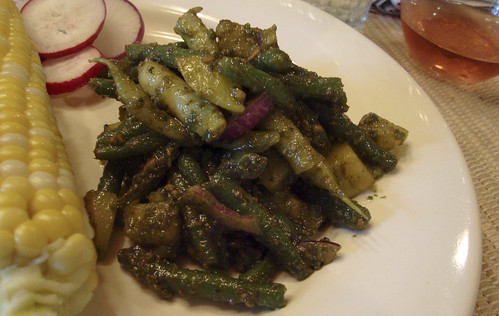
Use Your Booty: Green Bean and Potato Pesto Salad

Yesterday was a red-letter day vegetable-wise: our first green beans of the season and the first corn! The corn needed no embellishment other than a gentle enrobing of butter, and I turned the beans into a salad. I had fresh pesto on hand from last week's basil so I prepared a Genoese-inspired potato and green bean salad.

Green Bean and Potato Pesto Salad
Serves 3-4
I didn't have any on hand, but this salad would even better with the addition of a handful of toasted pine nuts or walnuts added in at the end.
  • 4 handfuls green beans, stem ends cut off, beans cut into 2" lengths (I used both green and yellow beans)
  • 3 medium-sized red-skinned or Yukon gold potatoes cut into 1/2" dice
  • 1/4 red onion sliced thin
  • 1/4 - 1/2 cup pesto
  • salt and pepper
  • red wine or sherry vinegar
This is a little fussy, but you really need to cook the beans and potatoes separately to ensure they are cooked properly.

Fill a large bowl with very cold water.

Put a large saucepan of water on the stove and bring it to a boil. Salt the water well (2-3 healthy pinches). Put the beans in the water and boil for 2-3 minutes until they are bright green and tender. Using a slotted spoon or strainer, transfer the beans out of the boiling water and into the bowl of cold water. When cool, transfer the cooked beans to a mixing bowl.

Since I used yellow beans too, I then repeated this step with the yellow beans.

Bring the water back to a boil and then cook the potatoes until tender, about 7-10 minutes. Transfer the potatoes out of the boiling water and into the bowl of cold water. When cool, transfer them to the bowl with the beans.

Add the onions to the beans and potatoes.

Stir in the pesto, adding enough to sauce the vegetables well. Taste and add salt & pepper to taste. If the salad tastes a little flat, add vinegar, a few drops at a time, until the flavor is right for you.


This Summer, I am chronicling my first CSA (Community Supported Agriculture) experience. My CSA share is from Arrowhead Farm, a farm based in Newburyport, MA. Each week, I am posting about what was in my share and what I'm doing with it. By way of full disclosure, I won my share through a raffle and am not paying for it. However, Arrowhead did not know I was entered in the raffle, and I received no special consideration because of this blog. I paid for my livestock share. A full set of all the photos I've taken of this share is here.
Amanda Hesser's Peach Tart


Except I didn't make a peach tart. Instead, I made a fig and blueberry tart. I was turned on to this recipe by my friend Lynn. She told me how her young son (like 10 years oldish?) made these tarts himself.

See, these are his in the oven:

This is not meant to be intimidating. This recipe is super easy and super adaptable. Use the fruit you have on hand and you'll be fine. It's fast too - I had the tart ready to go in the oven before the end of the oven's preheat cycle.

I'm going to use this tart recipe in a savory application too: I'll fill the tart shell with chopped fresh tomatoes, cooked Swiss chard and goat cheese. Will let you know how it goes.

I don't normally post other people's recipes, especially when I don't own the cookbook (a situation I'm about to remedy), but this recipe is all over the interwebs, so I'm a little more comfortable posting it.

Fruit Tart
Based on Amanda Hesser's recipe for Peach Tart from Cooking for Mr. Latte.
Makes 1 tart (I used an 8" tart pan, but I think you could use a 9" or 10" pan - you can see my crust was sorta thick, which I prefer)
  • 1 1/2 cups (6.75 ounces) flour
  • 1/2 tsp salt
  • 1 tsp sugar
  • 1/2 cup (4 ounces) olive oil
  • 2 tbs (1 ounce) milk
  • Fruit or other filling of your choice - I used about 3 cups of fruit but a lot depends on the size of your tart pan
  • 3/4 cup (5.25 ounces) sugar
  • 2 tbs flour
  • 1/4 tsp salt
  • 2 tbs (1 ounce) cold butter
Preheat the oven to 425.

Mix the dry ingredients together. Mix the wet ingredients together. Combine the dry with the wet. It'll become a dough, right under your fingertips - I promise. When the tart dough has come together, press it into the tart pan. Make sure you press it in evenly, so the crust is evenly distributed across the bottom and sides.

Fill your tart with the fruit or other vegetables you've prepared.

In a small bowl, use your fingers to combine the sugar, salt and butter. Pinch and rub until you have a crumbly sugar mixture. Sprinkle the mixture over the top of the tart. (Obviously, omit this step if you're making a vegetable tart.)

Bake the tart until crust if well browned and the fruit is cooked and bubbly. This took me about 40 minutes in my oven.

Enjoy!

Friday, July 9, 2010

Use Your Booty: Pasta with Kale and Pancetta

What a great way to use up kale. Plus, put enough crispy pancetta on top and you've got a chance at winning over kale-haters. From start to finish, this dish took less than half an hour to pull together.

Pasta with Kale & Pancetta
Serves 6-8
  • 1 pound whole wheat spaghetti
  • 2 bunches kale, leaves pulled from the stems and cut into thin strips
  • 4 ounces thinly sliced pancetta (if you only have thick-cut pancetta, cut it into small cubes)
  • 1/2 of a small onion, sliced into super-thin strips
  • 1 egg, beaten, optional
  • parmesan cheese
  • salt & pepper
  • sherry vinegar
Boil the spaghetti in a large pot of salted water. When the pasta is almost cooked through (just still a tiny bit chewy) add the kale to the pasta pot. When the pasta is cooked to your taste, drain the pasta and kale, reserving a cup of the cooking water (to make sure you don't forget this part, put a coffee mug in the colander to remind you to scoop out some pasta water).

In the meantime, sauté the pancetta in a skillet until it's crisp. Set aside.

When the pasta ia cooked, dump it back into the pot, add in the sliced onion, and stir in a little pasta water. Add in the beaten egg, if using, and keep stirring, adding more pasta water if needed to make a saucier consistency. Stir in a handful or so of parmesan cheese. Taste and add salt and pepper to taste (I like this dish peppery).

Portion the pasta into soup plates and top with crispy pancetta. Drizzle a few drops of vinegar over the top. Enjoy!

This Summer, I am chronicling my first CSA (Community Supported Agriculture) experience. My CSA share is from Arrowhead Farm, a farm based in Newburyport, MA. Each week, I am posting about what was in my share and what I'm doing with it. By way of full disclosure, I won my share through a raffle and am not paying for it. However, Arrowhead did not know I was entered in the raffle, and I received no special consideration because of this blog. I paid for my livestock share. A full set of all the photos I've taken of this share is here.

Monday, July 5, 2010

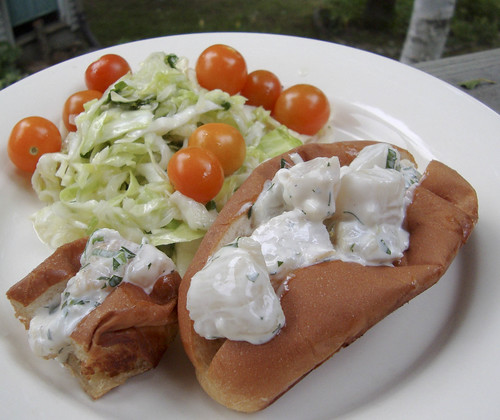
Make This Please: Scallop Roll

The lobster roll is a staple of the summer dining menu: chunks of lobster meat cloaked in mayonnaise, and accompanied by chopped celery and herbs. When Dave asked for a scallop roll for dinner he was thinking of what we see at the clam shacks around here: deep fried, breaded scallops in a hot dog bun. Somehow I had a brain fade and thought lobster roll instead. Happy accident.

I dressed chunks of cooked scallops with mayonnaise, whisper-thin slices of onion, chopped parsley and scallions and a squeeze of lemon juice. The scallops then got spooned into a butter-grilled hot dog bun.

I cut the richness of the scallop roll by serving it with a lemony slaw and some sun gold tomatoes.

Thursday, July 1, 2010

Use Your Booty: Sri Lankan Greens


With all the green, leafy bounty I've been getting from my CSA, I'm surprised it's taken this long to get this recipe onto our table and into this blog. The recipe comes from Madhur Jaffrey's World Vegetarian, which, by the way, is a great resource for recipes for vegetables that are new to you.

I used amaranth in this version, but you could use cabbage, KALE, chard, KALE, mustard, KALE, spinach - you get the point. The coconut is a nice touch: don't be fearful that your dish will taste like a pina colada, there's just a wee bit.

We enjoyed these greens on a plate (that's them in the top of the picture) with some curried cauliflower, a radish pickle some seriously hot hot sauce and basmati rice.

Sri Lankan Greens
Serves 4
  • olive oil
  • 1 onion, sliced into thin rings
  • 1 jalapeno, sliced into thin rings (for lots of heat) or just slit lengthwise (for a wee bit of heat)
  • 1-2 bunches of greens, leaves stripped from stems and cut into thin strips - enough to yield about 8 cups of greens
  • 1/2 teaspoon salt
  • 1/4 teaspoon turmeric
  • 2-3 tablespoons shredded coconut (I have used unsweetened coconut from the health food store and sweetened flake coconut from the supermarket - both work fine, you can also use fresh coconut if you have it)
Saute the onion and pepper in a large skillet over medium-high heat until the onion starts to brown - about 5 minutes.

Add the greens, salt and turmeric and stir. Let the greens start to wilt down. If the greens appear too dry add a little water to the pan. Cover and turn the heat to low.

Braise the greens for 10 - 20 minutes (softer greens like spinach will be tender sooner than tougher greens like kale).

When the greens are tender, stir in the coconut - taste for salt and adjust seasoning to taste.

This Summer, I am chronicling my first CSA (Community Supported Agriculture) experience. My CSA share is from Arrowhead Farm, a farm based in Newburyport, MA. Each week, I am posting about what was in my share and what I'm doing with it. By way of full disclosure, I won my share through a raffle and am not paying for it. However, Arrowhead did not know I was entered in the raffle, and I received no special consideration because of this blog. I paid for my livestock share. A full set of all the photos I've taken of this share is here.

Wednesday, June 30, 2010

Use Your Booty: Beet Carpaccio


This is one of the recipes (barely a recipe) that is great for summer - it's super fast, easily adaptable and is a nice, cooling addition to a meal. Carpaccio is traditionally a dish of very thinly sliced or pounded beef, garnished with olive oil, onion and capers. It's been adapted in recent years, to be a dish of thinly sliced something (scallops, zucchini, seared lamb, etc.).

Fresh beets are a great ingredient to highlight in this way. I thinly sliced two types of beet: Chioggia (those are the bullseye ones) and red beets. I laid the slices [in a somewhat slapdash manner, I'll admit] onto a plate with some thin slices of baby onion, drizzled them with chive vinegar, olive oil, salt & pepper and a few onion flowers.

That's it. I like to dress the vegetable carpaccio dishes a few minutes before we eat them, so the vegetables can soften up a little in the oil and vinegar.

This Summer, I am chronicling my first CSA (Community Supported Agriculture) experience. My CSA share is from Arrowhead Farm, a farm based in Newburyport, MA. Each week, I am posting about what was in my share and what I'm doing with it. By way of full disclosure, I won my share through a raffle and am not paying for it. However, Arrowhead did not know I was entered in the raffle, and I received no special consideration because of this blog. I paid for my livestock share.

Friday, June 25, 2010

Use Your Booty: Chickpea, Kale & Butternut Squash with Tahini Dressing

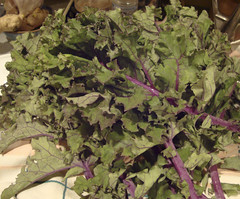
Ah kale, I do love it, but it certainly seems like kale and I are going to have to become good friends for me to survive this CSA. Fortunately, that's not really hard to do: First, my CSA is growing nine types of kale this season. Second, kale is pretty versatile - it can be used in so many different ways: bruschetta, a hearty soup, pesto, etc.

This salad's original recipe did not include kale, but since it's such a natural partner to chickpeas and butternut squash, I thought everyone would play nice together. The tahini dressing is nice on its own over roasted vegetables, lamb burgers, or as a dip for vegetables.

Chickpea, Kale and Butternut Squash Salad with Tahini Dressing
Serves 2-3 as an entrée salad, more as a side.
The original recipe, from Moro Restaurant, is here on Orangette, Molly Wizenberg's lovely blog. The recipe is super adaptable: make it work with what you have in the fridge. If you have leftover cooked squash or sweet potatoes, this is a great way to use it.

Enjoy this salad warm, as we did, or cold. If you're going to have it cold, add the dressing right before serving.
  • olive oil
  • 2 cups of cubed butternut squash or sweet potatoes
  • 1 bunch kale, stripped off stiff stems and cut into bite-sized pieces or thin strips
  • 2 cups cooked chickpeas (1 15 oz. can chickpeas, drained and rinsed)
Dressing
  • 1 garlic clove, pressed or minced
  • 3 tablespoons tahini (sesame paste)
  • 3 tablespoons lemon juice
  • 2 tablespoons water
  • 2-4 tablespoons olive oil
  • salt and pepper
Sauté the squash with a little olive oil in a large skillet over medium-high heat. Cook until the squash is tender. Add the kale to the pan and sauté until wilted, adding a little water to help it steam through. Cook until kale is wilted down, about 5-7 minutes. Add the chickpeas to the pan. Season with salt and pepper to taste.

Make the dressing: Whisk together all the dressing ingredients except the oil and salt & pepper. Whisk until the dressing looks smooth and creamy. Add a little water if it seems too thick. Whisk in the smaller amount of olive oil. Taste the dressing: if it's too sour add more olive oil. Taste again and adjust salt and pepper to your liking. Whisk in a few drops of water if it still seems too thick; it should the consistency of heavy cream.

Divide the salad among plates and drizzle with dressing.

This Summer, I am chronicling my first CSA (Community Supported Agriculture) experience. My CSA share is from Arrowhead Farm, a farm based in Newburyport, MA. Each week, I am posting about what was in my share and what I'm doing with it. By way of full disclosure, I won my share through a raffle and am not paying for it. However, Arrowhead did not know I was entered in the raffle, and I received no special consideration because of this blog. I paid for my livestock share. A full set of all the photos I've taken of this share is here.

Monday, June 21, 2010

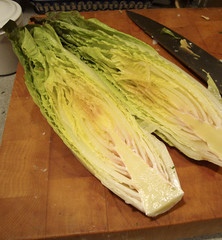
Use Your Booty: Grilled Romaine


Here's another public service post to help you use up your bountiful basket of lettuce. Did you know you can grill lettuce? Romaine is your best bet for grilling - the floppy looseleaf lettuces just get soggy and well, floppier. Use those in
lettuce soup or salads.

The method is easy. If your romaine head is really large (too much for you and your dining partners to consume in one sitting), peel off the outer leaves, reserving them for salads or sandwiches or some such thing. Then cut the head in half through the core. If the head is large, cut it into quarters.

Drizzle the cut sides of the lettuce with olive oil or a vinaigrette of your choice. Grill, cut side down, over medium-high heat. When the lettuce has grill marks and is gently charred on the edges, it's done. This will take about 3-5 minutes depending on the heat of your grill, the amount of oil you use and the size of the lettuce heads.

Before serving, drizzle the lettuces with a little vinaigrette or just drizzle with olive oil, sprinkle with salt and squeeze lemon over the top.

This is a great side dish for grilled dishes. We enjoy it with grilled meat or seafood and a grain salad on the side.

This Summer, I am chronicling my first CSA (Community Supported Agriculture) experience. My CSA share is from Arrowhead Farm, a farm based in Newburyport, MA. Each week, I am posting about what was in my share and what I'm doing with it. By way of full disclosure, I won my share through a raffle and am not paying for it. However, Arrowhead did not know I was entered in the raffle, and I received no special consideration because of this blog. I paid for my livestock share. A full set of all the photos I've taken of this share is here.
Use Your Booty: Lettuce Soup with Spring Peas


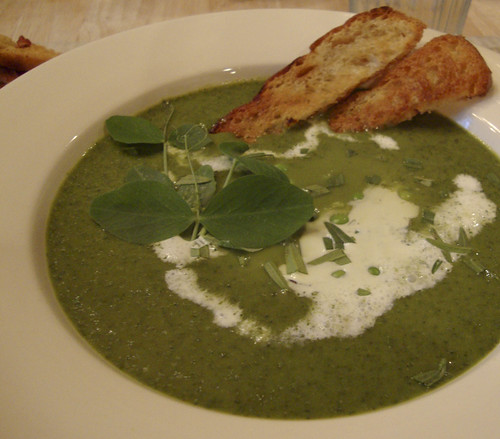
The idea of lettuce soup may make you cock your head to the side and go "huh?" but do give this soup a try. If you're in a CSA you'll probably be buried in lettuces shortly and this is a nice alternative to yet another green salad. I used all green lettuces because I think red lettuce might have turned this soup's color a little muddy.

I garnished the soup with steamed peas, a few pea tendrils and some mint and chives. I served our soup chilled; it was so insanely hot and humid today, the idea of hot soup was painful.

Lettuce Soup
Serves 2-3
A few thoughts on this recipe:
  • Serve it in mugs for sipping - it was super splashy to eat out of a bowl
  • Next time, I'm going to add a potato or two to the pot to provide a little more body to the soup. The version was refreshing but I think a little more richness would be nice.
  • If you're serving this cold - make sure it's super cold: in the fridge overnight is great. I made it the day we ate it, so I poured the soup in to a ziploc bag and left it in the freezer for two hours.
  • 1 onion, diced
  • olive oil and/or butter
  • 1 medium potato, optional (see above), cubed, peeled, if you wish
  • 1-2 large heads of lettuce, ribs and leaves coarsely chopped (14-16 cups - that is NOT a typo) - I used a combination of lettuces: oak leaf, buttercrunch, green leaf and romaine
  • 2 cups chicken broth or water
  • salt and pepper
  • garnishes: herbs of your choice (mint, chives and summer savory would be nice), cooked peas, cream, creme fraiche
Sweat the onion, over medium-low heat, in a stockpot in a little butter or olive oil until softened, about 5-10 minutes.

If using the potato, add it to the pot with the chicken broth or water and simmer until the potato is softened. If you're not using the potato, add the broth or water to the pot.

Add the lettuce to the simmering liquid and cook for 5-10 minutes, until lettuce is wilted down and softened - adding a little water the lettuce needs it to cook down. Purée the soup in a blender in batches, let the blender run for a while to really break down the lettuce as it's more fibrous than you might think. Add cold water to the blender if needed to help the blending along. I strained the soup to get rid of some of the larger fibers that didn't break down. If you don't do that your soup will like be a little chunkier than mine was. It will still taste good though.

Check seasoning and add salt and pepper to taste.

If serving cold chill the soup down until it's super cold. Check the seasoning again and add more salt as needed.

The lettuce will have a little more bitterness than you might expect - add a pinch of sugar and/or a squeeze or lemon to counteract that if needed.

Serve in bowls or mugs and garnish with herbs, fresh peas and/or a drizzle of cream or creme fraiche.

This Summer, I am chronicling my first CSA (Community Supported Agriculture) experience. My CSA share is from Arrowhead Farm, a farm based in Newburyport, MA. Each week, I am posting about what was in my share and what I'm doing with it. By way of full disclosure, I won my share through a raffle and am not paying for it. However, Arrowhead did not know I was entered in the raffle, and I received no special consideration because of this blog. I paid for my livestock share. A full set of all the photos I've taken of this share is here.

Tuesday, June 15, 2010

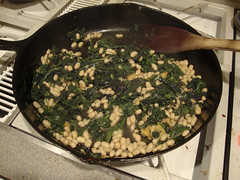
Use Your Booty: Bruschetta with Kale & White Beans

Let's get one thing out the way right up front: broo-SKET-a, not brooshetta. Feel free to tell your waitress.

Ok then, that said, let's move on to the recipe.

Bruschetta is a great way to use up slightly stale rustic-style bread (like this kind of bread). Slice it thickish - I like between 1/2" - 3/4" thick. Grill or broil it, rub with garlic and drizzle with olive oil. Top with sautéed vegetables and eat like an open-faced sandwich. I like this version a lot. You might think beans and bread is a lot of starchiness, but the beans add a lovely creaminess to the dish without adding fat.

Kale & White Bean Bruschetta
Serves 2
This is easily doubled, tripled or quadrupled. We eat it for dinner, but if you cut the bread into smaller pieces it would be a nice first course or nibble for a summer party.
  • 2 ounces pancetta, cubed or bacon, chopped (optional)
  • olive oil
  • 3-4 cloves garlic, sliced thin
  • 1 big bunch kale, leaves removed from the stems and coarsely chopped or torn (you need a lot of kale - it really cooks down)
  • 1 can white beans, drained and rinsed (about 1-1.5 cups cooked beans)
  • 4 slices rustic-style crusty bread (you know what you'll eat, so the number of slices will depend on the size of your loaf)
  • 1 clove garlic
In a large skillet, cook the pancetta or bacon (if using) until it's crisp and browned. Remove the pancetta from the pan and set aside. If the pan is too dry (or if you didn't use the meat, or if you don't want to cook in bacon fat) add enough olive oil to generously film the bottom of the pan.

When the oil is hot, add the garlic. When it just starts to color, add the kale to the pan (it will sputter - watch out for flying oil droplets!). Stir the kale as it wilts and softens. If it starts to stick add a little water to the pan. When the kale is wilted down and softened, add the beans and heat them through. Add salt and pepper to taste, remembering that if you're using pancetta or bacon they will add salt to the dish too.

Meanwhile heat your grill or broiler. Brush the slices of bread with oil and grill or broil, turning once until browned and toasty (I like mine on the brown side of incinerated, whereas Dave prefers his a little more tan/blond). Rub the slices of bread with the other clove of garlic. Place the bread on dinner plates and drizzle with a little more oil. Top the bread slices with the kale & bean mixture and sprinkle the pancetta over the kale. Drizzle with a wee bit more oil (you don't want this plate dripping with oil, so use a teaspoon or two per drizzle).

Mangia!

This Summer, I am chronicling my first CSA (Community Supported Agriculture) experience. My CSA share is from Arrowhead Farm, a farm based in Newburyport, MA. Each week, I am posting about what was in my share and what I'm doing with it. By way of full disclosure, I won my share through a raffle and am not paying for it. However, Arrowhead did not know I was entered in the raffle, and I received no special consideration because of this blog. I paid for my livestock share.

Monday, June 14, 2010

Use Your Booty: Wilted Greens Salad

I had heard from many former and current CSAers that a major part of my share would be greens, both bitter and salad. Well this share is no different. Fortunately, I adore greens (chard, kale, collards, mustard, etc., etc.) and cook with them all the time. One atypical treatment I like, especially in the summer, is wilting.

I wilt greens with heat all the time, but this method just uses salad dressing. You know how when you dress a salad, it gets all soft and wilty if you let it sit? That's basically what you're doing here, except the stiffer greens like chard or mustard respond well to this treatment: they don't get all slimy like lettuce would.

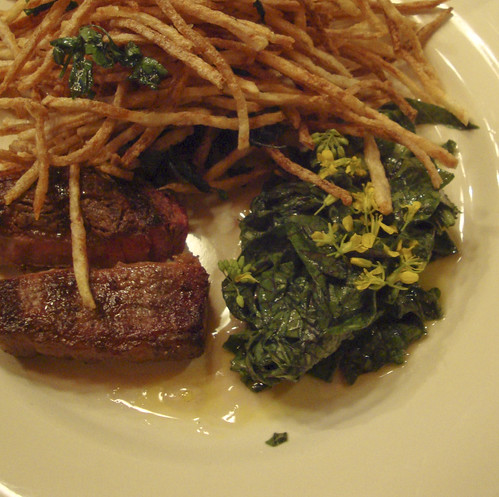
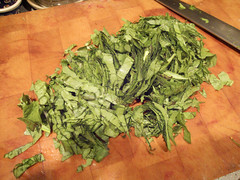
For this salad, I took a bunch of mustard greens, stripped the leaves from the stems, rolled 'em up and cut them into a chiffonade (fine strips). Then I tossed the greens with too much dressing (a basic olive oil and lemon vinaigrette) and let them sit. After about 20 minutes, they're all wilty and soft, sort of like they'd been cooked. We ate this salad alongside some great beef from our Arrowhead livestock share and a big bundle of shoestring potatoes.

I left this version very simple, but this salad is very nice if you add (after wilting) julienned carrots, peppers or cucumber, scallions or other herbs. And it's really nice if you add toasted pine nuts or pistachios to provide a contrast to the soft, smooth greens.

The one problem with this method is that the greens will continue to wilt and release moisture, so just drain off any liquid if they release too much and everything seems soggy.

This Summer, I am chronicling my first CSA (Community Supported Agriculture) experience. My CSA share is from Arrowhead Farm, a farm based in Newburyport, MA. Each week, I am posting about what was in my share and what I'm doing with it. By way of full disclosure, I won my share through a raffle and am not paying for it. However, Arrowhead did not know I was entered in the raffle, and I received no special consideration because of this blog. I paid for my livestock share.

Tuesday, June 8, 2010

Use Your Booty: Kale Pesto

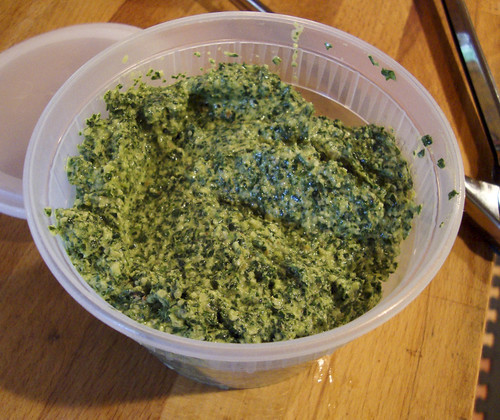
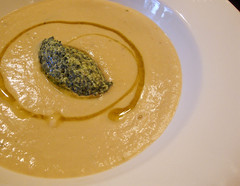
This week's CSA pickup included a smallish bunch of kale. I knew when it cooked down it wouldn't be enough for side dish on its own and I already had soup on the menu. So I thought a pesto would be nice thing to try. I found a few kale pesto recipes on the internet and most of them asked for the kale to be boiled for 10 minutes or so to soften and tame it. That seemed like overkill to me so I decided to just do a quick blanch with a boiling water rinse instead.

So, this picture above doesn't really really do this pesto justice. You can eat it on crostini, stir it into pasta (with a few spoonfuls of pasta cooking water) or a fritatta or use it as a sandwich spread or dip (thinned with some yogurt perhaps). Or you can use it in a totally swellegant presentation like that one, over there ---> and dazzle your friends and family.

Kale Pesto
Yields about 1 1/2 cups
You can use other nuts (I think pistachios would be great), but I liked the flavor of the walnuts against the kale. I didn't add any cheese to mine, but if you wanted to enrich this pesto with it, I would add a few tablespoons of grated pecorino romano.

This would probably work with collards too, but I wouldn't use chard or spinach - the leaves are too soft for this treatment.
  • 1 small bunch kale (to yield 4-6 cups loosely packed leaves)
  • 1 clove garlic
  • handful of walnuts (about 1/4 cup)
  • salt and pepper
  • red wine vinegar or lemon juice
  • olive oil
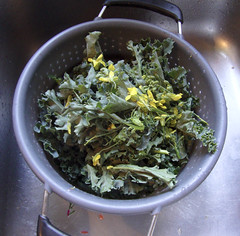
Strip the leaves from the kale stems and them in a colander or large strainer (if the leaves are large you can tear them into smaller pieces so they fit into the colander). Bring a quart of water to a boil. Pour the water over the kale leaves.
You'll see their color turn nice and bright and their volume will diminish a lot.

Press the kale to make sure it's not super soggy - a little moisture is okay. Put the kale into your food processor with the garlic and walnuts (leave out the cheese if you're using any). Pulse to form a paste - you might need to add a little water back in to keep things moving.

When the pesto looks nice and pesto-ish taste it and add salt, pepper and vinegar to taste. You can also add cheese now if you're using any. Give the pesto a glug of olive oil to enrich it a little. Pulse and taste again - the pesto will probably need more salt and acid than you might think.

This Summer, I am chronicling my first CSA (Community Supported Agriculture) experience. My CSA share is from Arrowhead Farm, a farm based in Newburyport, MA. Each week, I am posting about what was in my share and what I'm doing with it. By way of full disclosure, I won my share through a raffle and am not paying for it. However, Arrowhead did not know I was entered in the raffle, and I received no special consideration because of this blog.

Thursday, June 3, 2010

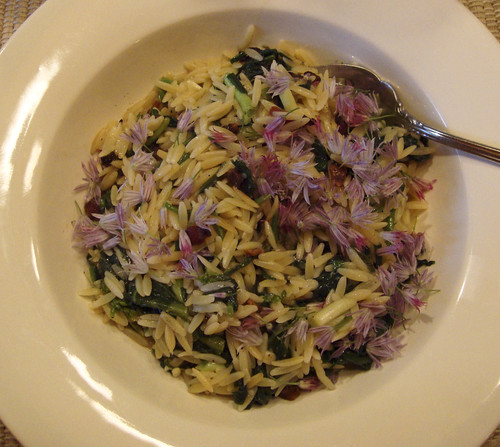
Use Your Booty: Orzo with Arugula and Chive Blossoms

This is another non-recipe recipe, but that's the way market meals tend to go, isn't it?

We ate this dish hot, like a pasta main course, but it would be pretty great at room temperature as a pasta salad too. Don't skimp on the chive blossoms: they're pretty and they taste great!

Orzo with Arugula and Chive Blossoms
Serves four as an entrée and six as a side dish
  • 1 pound orzo pasta (substitute another small pasta shape if you can't find orzo)
  • 2 bunches arugula, rabe, chard, mizuna, spinach (after the leaves are stripped off the stems you should have 6-8 cups of loosely packed leaves - I used some finely chopped Swiss chard stems too - those are the reddish bits you see)
  • a dozen chive blossoms (or 1/4 cup of mined chives)
  • 1/4 ounce parmesan cheese, finely grated
  • high quality extra virgin olive oil
Strip the greens leaves from their stems and then chop the leaves. In a large skillet over medium-high heat, sauté the greens in a little olive oil until they are wilted and softened - about 5 minutes or so. Turn off the heat.

Meanwhile, boil the pasta in plenty of salted water until it's cooked to your preferred doneness. before draining the pasta, reserve about a cup of cooking water.

In the skillet, combine the drained pasta, the parmesan cheese and enough pasta water to sauce things up. Stir in the chive blossoms and taste for salt and pepper. Drizzle some olive oil over the top of the pasta and serve.


This Summer, I am chronicling my first CSA (Community Supported Agriculture) experience. My CSA share is from Arrowhead Farm, a farm based in Newburyport, MA. Each week, I am posting about what was in my share and what I'm doing with it. By way of full disclosure, I won my share through a raffle and am not paying for it. However, Arrowhead did not know I was entered in the raffle, and I received no special consideration because of this blog.

Monday, May 24, 2010

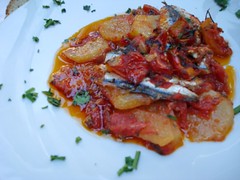
Tegame alla Vernazzana

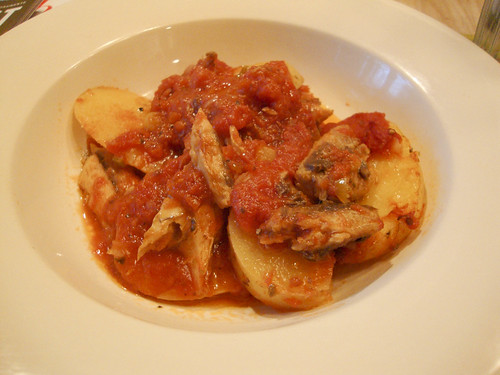
In October of 2008 we traveled to the Italian region of Liguria. One of the best things we ate on that trip (and we ate a lot of great things during those two weeks) was a dish called Tegame alla Vernazzana. We (well, I) ordered it by mistake, and what a happy mistake it was. We were served a gorgeous dish of anchovy fillets stewed with slices of yellow potato and tomatoes. The whole thing was laced with a rich, fruity olive oil and sprinkled with parsley. We scraped the plate clean, using all the bread we could to get every bit of that tomatoey-olive oily-fishy sauce.

After doing a little research it looks like "tegame" is a word for a covered baking dish. Vernazza was the town where we ate it. I guess the English translation of the
dish's name is "baked dish from Vernazza" - super descriptive. Working from the picture we took of our meal and a little web research, I pulled together this version.

In Vernazza our dish was made with fresh anchovies (see how nice and shiny they are?), but they are hard to find over here. In fact it's hard to find fresh sardines either. I decided to use canned sardines in my version. This also makes it a year-round dish, as opposed to a seasonal one. (An aside: For those who haven't ever tried a fresh anchovy and are thinking of the fillets found in cans, fresh anchovies are a totally different thing. They are oily, but no more than salmon. Their flavor is gently fishy, not strong at all and they are fabulous grilled, fried, sauteed or stewed. If you see them at your local fishmonger, snap 'em up.)

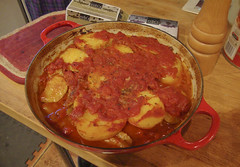
Here's my version of the dish. I hope to get back to Vernazza to try this dish again, but in the meantime, this will have to do.

Tegame alla Vernazzana
Serves 3-4
This dish was very good the next day, gently reheated. I added a splash of water to rehydrate the sauce.
  • 1 pound Yukon Gold potatoes or another buttery, boiling-type potato
  • good quality olive oil
  • 2 cups chopped tomatoes or good-quality canned whole tomatoes, toran into pieces (I used Muir Glen)
  • 2 cans sardines in olive oil
  • 1 cup white wine
  • dried oregano
Preheat the oven to 350.

Slice the potatoes into thick slices: about 1/2" thick. Simmer the potatoes in a pot of salted water until just tender, about 10 minutes.

Drain the potatoes.

In a casserole or baking dish with a lid (mine is an 10" braising pan), start layering the ingredients: glug a healthy dollop of olive oil into the pan. Lay in half the potatoes, half the tomatoes and all of the sardines. Season with salt and pepper and healthy sprinkle of oregano. Lay the rest of the potatoes and then the tomatoes over the top. Sprinkle more oregano over the dish and pour in the white wine.

Cover the dish and put it in the oven until the dish is hot and bubbling, about 30 minutes. Serve in a soup plate, drizzled with more olive oil.

Grill-Roasted Mussels with Green Garlic and Sorrel

My Sundays are spent at the Newburyport Farmers' Market, selling my bakery items. While it's great to be outside and meeting people, one real drawback to selling at the market is that I don't get to shop at all. So imagine my pleasure at the end of last day's market when a boy ran up to me and handed me a bag of wild mussels (what a gift!). They were from Eastman's Fish Market, a fisherman-owned and operated seafood market in Seabrook, NH. Eastman's offer a CSF (Community Supported Fishery) program. They are a fantastic addition to our market.


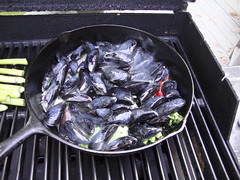
Anyhoo, back to the mussels. It was such a beautiful day yesterday that I wanted to stay outside; so I decided to grill-roast the mussels. Grill-roasting is a great option for seafood in that the seafood can pick up the smokiness from the grill, but you're never in any danger of losing your meal through the grill grates.

My garden is loaded with sorrel and green garlic (immature garlic plants) so I decided I would use them as my primary flavorings. With a loaf of [my] olive bread from the market and a green salad it made a great dinner.

Grill-Roasted Mussels with Green Garlic and Sorrel
Two generous servings
  • 2 lbs mussels, prepared for cooking: rinsed well, any beards removed, dead mussels discarded
  • 3 tablespoons butter
  • 1/2 cup chopped green garlic (or 1 bunch scallions, chopped and 2 cloves minced garlic)
  • 1 dried chile pod (optional)
  • 1 cup sorrel, cut into thin strips (or minced herbs like parsley, dill, chives, and/or fennel)
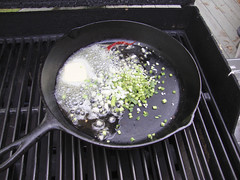
Place a large cast iron skillet (12" or more) on a hot grill (I use a gas grill set on high). Let the skillet get super hot - leave it on the grill for 5-10 minutes.

Add the butter, green garlic and chile pod to the pan. The butter should sizzle up and start to melt very fast. Add the mussels to the skillet. Cover the grill. Let the mussels cook, giving them a stir every few minutes or so. My mussels were cooked through in a little less than 10 minutes. Yours may take more or less time depending on their size, their temperature when you started cooking, etc. Toss the sorrel over the cooked mussels and give it all a stir.

Serve the mussels in deep bowls with bread for dipping. These won't be super-soupy mussels because a lot of the liquid will simmer off on the grill, but the liquid that's left will be concentrated and very flavorful. You might want to add a sprinkle of salt if your mussels aren't briny enough.

Saturday, May 22, 2010

Use Your Booty: Green Soup 1

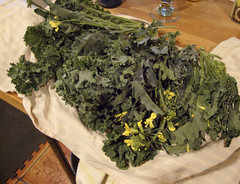
If you're getting a spring share from your CSA, or if you're tempted by the mountains of springtime vegetables at the farmers' market, there will come a time when you have to face down a MOUNTAIN of leafy greens (you know the ones: those huge bundles of flowering leafy lovelies like mizuna, arugula, rabe, kale, etc.). You could do what most people do: throw them in a bag in the back of your refrigerator and then throw the soggy mess out in a week or so. Or, you could make this soup. (Sorry, I know this picture is just awful - the soup is really a gorgeous emerald green.)

I don't really have a recipe: use what you've got on hand, cook it down and blend it up. But for those who would like a little more direction than that, here you go:

For each person you will need one - two bunches of greens (those four bunches down there made enough soup for two to three servings). Pick the leaves from the stems. You 'll end up with about 4 cups of greens per bunch. Take 1 medium potato per person and slice it super thin. Put the potato in your soup pot and cover it with water. Simmer until the potato is soft and starts to fall apart. Stuff the greens into the pot and add 1-2 cups water (more or less depending on how many you're feeding).

You will think to yourself "this is an obscene amount of vegetation No way in hell can I eat all this." etc. etc. etc. Within 5 minutes that bunch of greens will be cooked down to almost 1/4 of its original mass and you'll start to understand why I had you start with so much.

Keep turning the greens, so the cooked ones come up to the top and the unwilted greens get pushed down into the simmering liquid at the bottom of the bottom. The idea is to get the greens all wilted down and cooking.

Now puree that mess. I like an immersion (or stick) blender because I can do the whole process right in the pot, but if you want the best results use your blender. You'll have to do it in batches, but the blender gives a much finer puree than the hand blender. Either way, puree until very smooth. Then, one step to gild this lily: strain the soup through a medium or fine strainer (you'll find a rubber spatula is helpful to push the soup through. This is a good idea if you've used tougher greens with strong stems; those fibers can be unpleasant to find in your finished soup.

Adjust the soupiness by adding more water if needed. Season with salt and pepper to taste. Serve hot or very cold, topped with a drizzle of cream or a dollop of yogurt. If your greens had them, the little yellow or white flowers are a lovely garnish. They are a great addition to a green salad too. Keep them in a glass of water, bouquet-style, until you use them up.

Note: for a chance, saute some curry powder or other Indian spices in a little oil first, then add the potato to the pot and proceed as above. Top the soup with yogurt and more spices that you've toasted in oil. The Indian flavors are really nice with the strong green flavor of this soup.
This Summer, I am chronicling my first CSA (Community Supported Agriculture) experience. My CSA share is from Arrowhead Farm, a farm based in Newburyport, MA. Each week, I am posting about what was in my share and what I'm doing with it. By way of full disclosure, I won my share through a raffle and am not paying for it. However, Arrowhead did not know I was entered int he raffle, and I received no special consideration because of this blog.
Blog Widget by LinkWithin