Sunday, August 10, 2008

Menu Forthcoming

We were away for a three-day weekend in Providence. Many reviews forthcoming. What a great eating city!

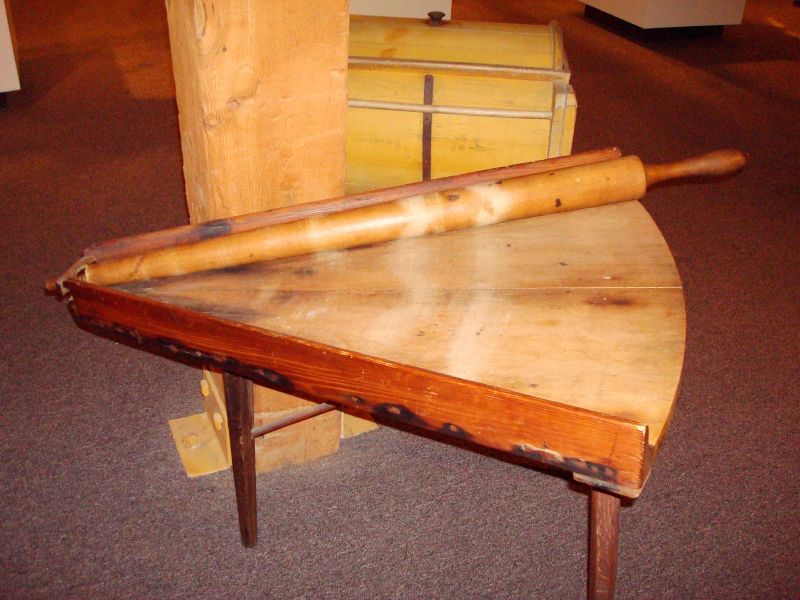
I'm working on this week's menu now and should have something up soon. In the meantime, here's a mystery antique food-related implement. Any guesses?

Friday, August 8, 2008

Drink of the Week: Ward Eight

MxMo XXX is upon us and the theme is "Local Flavor." Kevin at Save the Drinkers is hosting. I am going with Option 2: "Dig up an old drink that came from your city and revive it! If you can find the original bar, that would be even more interesting." As we are currently residing just North of Boston, I thought the Ward Eight cocktail would fit the bill.

There are two stories of the Ward Eight's genesis. Both stories agree that the Ward Eight was first served by the bar at Locke-Ober restaurant in the late 1800s and the election of Martin Lomansey to represent Boston's Ward Eight played a role in its creation. There is disagreement as to whether the cocktail was used as an inducement to get Lomansey into office or was created to celebrate his election. (Regardless, he did win his seat in office.)

The presence of orange juice in the drink is also debated. Oranges would have been a luxury item in late-1800s Boston. Some recipes leave it out. I have also seen recipes that call for club soda: definitely a late (and unnecessary in my opinion) addition to the recipe. Locke-Ober is a grande dame of Boston's restaurant scene. I am definitely going to stop by to see if they still make Ward Eights (my money's on "no they don't").

Ward Eight Cocktail
Shake together in an iced shaker:
  • 2 ounces rye whiskey
  • 1 ounce lemon juice
  • 1/2 - 1 ounce orange juice
  • 1/4 - 1/2 ounce grenadine (I used the greater amount and still needed to add a little simple syrup to my drink. My lemons were so tart!)
Strain into an iced cocktail glass. Garnish with a maraschino cherry if you have one.

Wednesday, August 6, 2008

Grilled Pork Belly

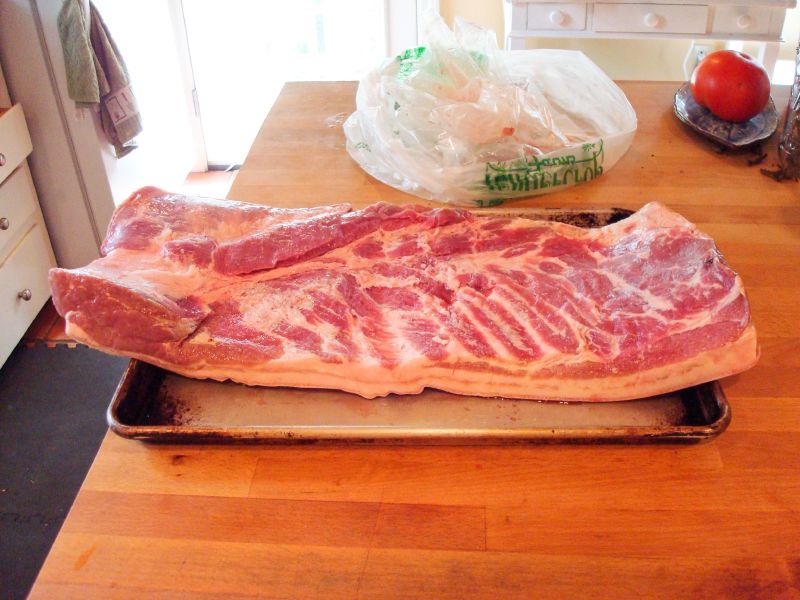
So, I'm curing some bacon. But that's a post for another time (like when the bacon is done). I procured my pork belly from my local farmstand. A whole pork belly is about 10 pounds of meaty, fatty porkiness (see below). I decided to use the center section for my bacon experiment as it was about the same thickness throughout. I cut out about 5 pounds for curing and that left me with another 5 pounds to play with.

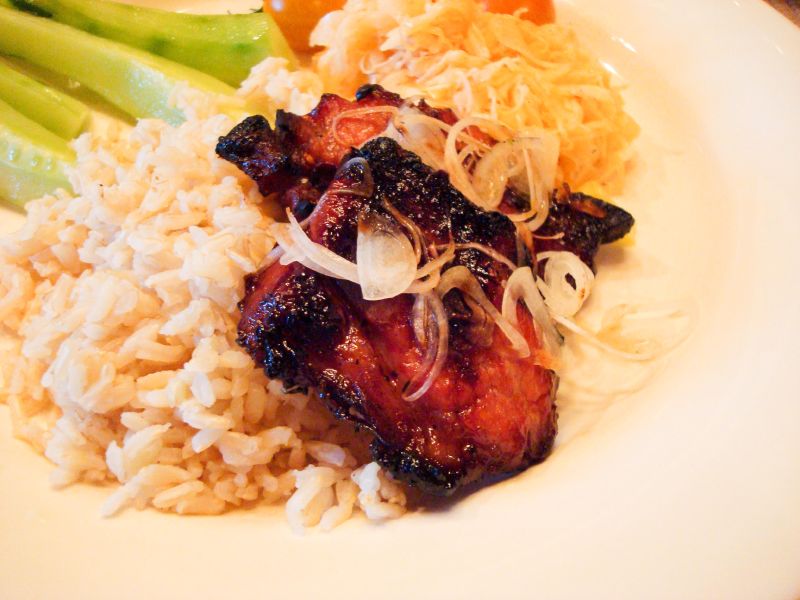
For my first foray into home-cooked pork belly I tried grilling. Whoa Nelly! What a success. We ended up with thick-cut, crunchy/chewy slices of pork meat laced with crispy strips of fattiness (even though almost all of the fat was rendered off).

I cut 8 3/4 inch slices off the pork belly and marinated them in fish sauce, brown sugar, crushed garlic and chile flakes. I didn't really measure; I used enough sugar and fish sauce to make a paste and then tossed in the 4 crushed garlic cloves and a few pinches of red pepper. I let that sit in the fridge for about 3 hours.

I grilled the slices over medium heat for about 30 minutes, and turned them occasionally. When they looked "done" (well-caramelized, most fat rendered off, sorta crispy) we ate them. I tossed some very thinly sliced shallot over the slices first. We ate the belly with brown rice, a vinegar-based cole slaw and tomatoes and cucumbers. (With that cut of meat, I need something healthy on our plates!)

Sunday, August 3, 2008

Drink of the Week: Magellan Martini

No, it's not the latest from deKuyper. This is a martini made from a newly reintroduced gin called Magellan. According to the Magellan distillers, the blue color comes from the final infusion of iris flowers. It is a strong-tasting gin and reminded me a lot of Bombay.

I think Magellan will be interesting to mix with and I am very curious to see how the color of the gin impacts the final color of the cocktail. Sea green Hanky Panky anyone?

Magellan Martini
Stir together in an iced mixing glass:
  • 2 1/2 ounces Magellan
  • 1/2 ounce dry vermouth
When very cold, strain into a chilled cocktail glass. Garnish with an olive or two.


Thursday, July 31, 2008

Steaming Vegetables

I don't know if it's the sultry heat, the high humidity or a general lack of inspiration, but I have found that I am steaming a lot of my vegetables this summer. To many, myself included, steaming is the "healthy" (read: boring) option for cooking vegetables - no added fat, no added salt, etc.

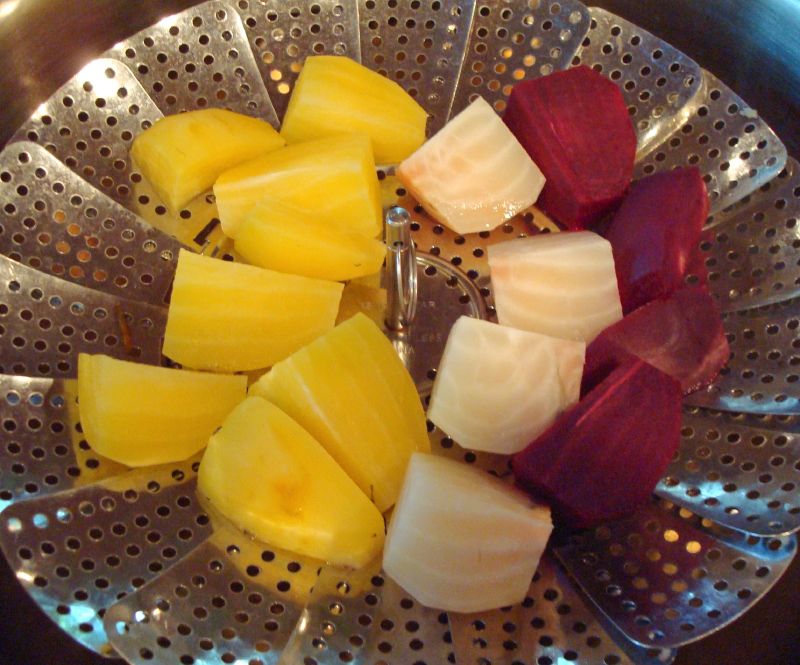
Steaming is simple. I use a steamer basket that looks a little like a flying saucer. What's nice about this style is I can put it in a saucepan or a skillet, depending on what I'm steaming. I set a little water to simmer in the bottom of the pot and put my vegetables into the basket.
I cover the pot or pan and check it intermittently (every 5 minutes or so - the beets took 15 minutes to get to fork-tender) to see how tender the vegetables have become.

When the vegetables are as tender as you wish, remove them from the steamer. That's it! These pics are of some beets I cooked up the other night. Steaming is cooler than roasting and neater than boiling (see how clear the colors remained after cooking). Plus I cooked all three varieties of beet at the same time without the red ones bleeding all over everything else.
To add more flavor, what I do frequently is saute (in the same pan I used for steaming) the now-cooked vegetables quickly in some oil or butter with a little garlic, onion, herbs, etc. I get a more consistent result by pre-cooking the vegetables and then sauteing than by sauteing them to cook them through.
Blog Widget by LinkWithin